What Is KYC? (And Why It Matters When You Open a Maash Account)
Understanding KYC verification: why financial apps ask for your ID, how the process works, and practical tips for Sri Lankan users opening a Maash account.

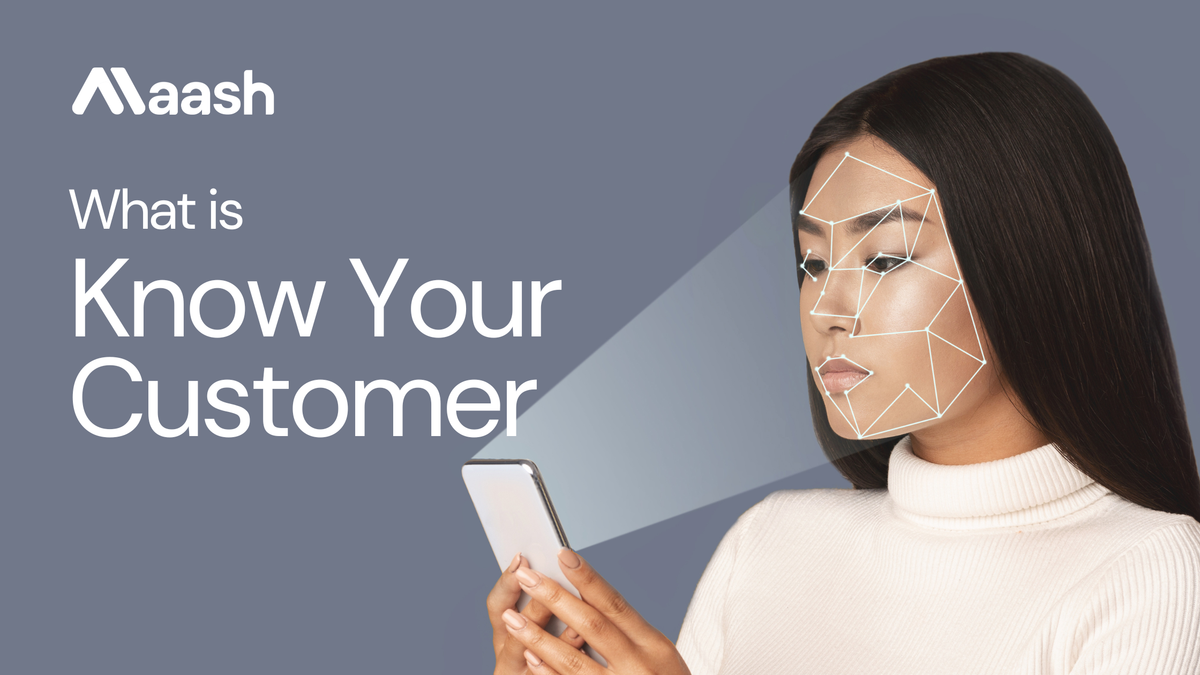
You've decided to try Maash. You download the app, create an account, and then it happens:
"Please verify your identity."
The app wants your ID. A selfie. Your address. Maybe even questions about your income.
If you're like most people, your first thought is: "Why do you need all this just to use an app?"
It's a fair question. This guide explains what KYC actually is, why every legitimate financial service requires it, and how to get through the process smoothly – especially if you're in Sri Lanka.
What Is KYC?
KYC stands for "Know Your Customer." It's the process financial services use to verify who you are before letting you hold or move money.
Think of it like showing your ID when you open a bank account – except it happens digitally, through your phone.
KYC is not unique to Maash. Every legitimate financial service does this:
- Traditional banks require it when you open an account
- PayPal, Wise, and other payment apps require it
- Credit card companies require it
- Even crypto exchanges require it
Why? Because regulators around the world require financial institutions to know who is using their services. This helps prevent:
- Fraud and identity theft
- Money laundering
- Terrorism financing
- Misuse of the financial system
The core elements of KYC for individuals:
- Personal information (name, date of birth, address, contact details)
- ID document verification (passport, national ID, driving licence)
- Proof you're a real person (selfie or liveness check)
- Sometimes: questions about income, source of funds, and account purpose
This isn't about invading your privacy randomly. It's about confirming your identity and meeting legal requirements so the service can operate.
Where Did KYC Come From?
KYC requirements didn't appear overnight. They evolved over decades through:
Anti-Money Laundering (AML) regulations: Governments wanted to stop criminals from hiding illegal money in the banking system.
Counter-Terrorist Financing (CTF) laws: After major terrorism incidents globally, regulators tightened requirements to track who is moving money and why.
International standards: Organizations like the Financial Action Task Force (FATF) set global recommendations that most countries follow. These standards push financial institutions to "know your customer."
After high-profile financial crimes and security incidents, regulators kept adding requirements. What started with banks eventually extended to:
- Money transfer services
- Payment processors
- Fintech apps
- Digital wallets
For Sri Lankan users: Local banks, card issuers, and modern apps like Maash all follow these standards – either directly or through their regulated partners.
Why Maash requires KYC: Maash works with fully regulated banking partners in the US (Lead Bank), EU (Banking Circle), and UAE (Zand Bank). Those partners require strong KYC before they allow users to open a virtual bank account to:
- Hold balances
- Receive cross-border payments
- Access cards and other features
Without proper KYC, those partnerships wouldn't exist – and neither would the service.
How KYC Works in Modern Apps
Here's what typically happens when you verify your identity with a financial app:
Step 1: Collect Basic Information
The app asks for:
- Full name
- Date of birth
- Nationality
- Residential address
- Email and phone number
This is standard information needed to create your profile and match it to your ID document.
Step 2: Capture ID Document
You upload or scan a government-issued ID:
- Passport (usually easiest for automated systems)
- National ID card
- Driving licence
Modern systems can often read the ID automatically using your phone's camera. Some can even read the NFC chip in newer passports.
Step 3: Selfie and Liveness Check
You take a selfie or record a short video following on-screen instructions.
Why? This proves:
- You're a real, live person (not just uploading a stolen ID photo)
- Your face matches the ID photo
- You're actually the person applying, not someone using your stolen documents
Step 4: Automated Verification
In the background, automated systems:
- Check that the ID is genuine and hasn't been tampered with
- Verify the information matches across documents
- Run basic checks against sanctions lists and watchlists
Step 5: Risk-Based Questions (Sometimes)
Depending on regulations and partner requirements, you might be asked:
- Income range or occupation
- Source of funds (salary, freelance, business)
- Expected monthly transaction volume
- Purpose of the account (savings, receiving payments, etc.)
These questions help the platform and its partners understand how you'll use the account and meet their compliance obligations.
Step 6: Decision
Your account is either:
✅ Verified (you get full access)
⏳ Flagged for manual review (takes longer but usually resolves)
❌ Declined (rare, usually due to document issues or eligibility restrictions)
Most legitimate apps try to make this as quick and painless as possible while still meeting what regulators and banking partners require.
How Maash Does KYC
Let me explain specifically how Maash handles identity verification.
KYC Technology Providers
Maash doesn't build KYC systems from scratch. Instead, we work with specialized providers:
Sumsub: Primary KYC provider used by thousands of financial institutions globally. They specialize in identity verification, AML screening, and fraud prevention.
Persona: Some banking or card partners use their own systems, including Persona, for specific verification flows.
These companies focus entirely on KYC and data security. They're widely trusted by regulated financial institutions worldwide.
What Maash Typically Asks For
For most personal accounts, here's what you'll need:
Personal information:
- Full name (as it appears on your ID)
- Email address
- Phone number
- Residential address
Identity document:
- Preferred: Passport (accepted globally, easiest for automated checks)
- Alternatives: National ID card or driving licence (where supported)
Selfie/liveness check:
- Quick selfie or short video to confirm you're real and match your ID photo
That's the baseline for most users.
Additional Information Sometimes Required
Depending on which features you're accessing and which banking partners are involved, you might also be asked:
Financial information:
- Income range or occupation
- Source of funds (where your money comes from)
- Expected monthly transaction volume
- Purpose of your account
Why we ask: Different banking partners have different compliance requirements. We only ask for additional information when needed to unlock specific features or meet partner obligations.
This isn't about judging how you spend money. It's about meeting legal requirements so we can continue offering the service.
Sri Lanka-Specific: Which Documents Work Best
Here's something important for Sri Lankan users: international KYC systems sometimes struggle with local document formats.
The Reality of Automated ID Recognition
Global KYC providers train their systems on thousands of ID types from different countries. But they're not always perfectly up-to-date with every new version of every document.
What we've seen with Sri Lankan documents:
Newer driving licences: Recent versions no longer have expiry dates at the front. Automated systems sometimes misread the issuance date as expiry date.
National ID cards: Certain designs cause automated systems to struggle with recognition, especially since there are multiple versions issued in country.
What this causes:
- Failed automatic recognition
- "Please try again" loops
- Extra time for manual review
- User frustration
Why Passport Is Usually Easiest
Passports follow more standardized global formats with consistent security features. This makes them:
- Easier for automated KYC tools to read accurately
- Less likely to trigger false rejections
- Faster to verify overall
Recommendation: If you have a valid passport, use it for Maash KYC. It usually results in the smoothest and fastest verification experience.
Don't have a passport? Don't worry. Maash supports other documents where possible. The team works with KYC providers to improve recognition of local IDs over time. It might just take a bit longer for manual review.
Tips for Smooth Verification
To avoid common problems:
For your ID photo:
- Clean your phone camera lens
- Use good lighting (no shadows or glare)
- Place the entire document within the frame
- Make sure all text is clearly readable
- Avoid reflections on plastic cards
For your information:
- Enter your name exactly as it appears on your ID
- Use the address format that matches your supporting documents
For liveness check:
- Follow on-screen instructions carefully
- Avoid backlighting (don't sit in front of a window)
- Keep your face fully inside the frame
Why KYC Actually Matters
KYC feels like friction. But it serves important purposes that protect you and keep the service running.
1. Protecting You From Fraud
KYC helps prevent someone else from opening a Maash account in your name.
Imagine: A scammer gets your name and phone number somehow. Without proper identity verification, they could:
- Create an account pretending to be you
- Receive payments meant for you
- Damage your reputation or credit
Strong KYC makes this much harder to do.
2. Protecting the Financial System
KYC helps reduce:
- Money laundering (criminals hiding illegal funds)
- Fraud and scam activity
- Terrorism financing
When one platform has weak KYC, it attracts bad actors. This can lead to:
- Banking partners cutting off the entire platform
- Regulators shutting down services in specific countries
- Legitimate users losing access
Strong KYC keeps bad actors out, which keeps the service running for legitimate users.
3. Maintaining Access to Banking Partners
Maash connects you to regulated banks:
- Lead Bank (US)
- Banking Circle (EU)
- Zand Bank (UAE)
Those partners require strong KYC before they allow:
- Cross-border transfers
- Access to their banking infrastructure
If Maash's KYC is weak or inconsistent, partners could:
- Reduce limits for all users
- Block certain corridors or currencies
- Stop working with Maash entirely
Every user who completes KYC properly helps maintain those partnerships for everyone.
4. Unlocking Full Maash Features
Without KYC, Maash can offer very limited functionality.
Completing KYC unlocks:
- Ability to receive payment from abroad with Virtual Bank Accounts
- Withdrawal to local banks
- Card features (when available)
Think of KYC as the key that unlocks the full Maash experience.
What Happens With Your Data
This is probably your second-biggest concern after "Why do you need this?"
Let's be clear about how your information is handled:
How Data Is Used
Your personal data and ID documents are used for:
- Identity verification (confirming you are who you say you are)
- Compliance with AML/CTF regulations
- Fraud prevention
- Meeting banking partner requirements
Your data is NOT:
- Sold to third-party advertisers
- Used for unrelated marketing purposes
- Shared beyond what's legally required
How Data Is Protected
Security measures:
- Industry-standard encryption for data storage and transmission
- Access controls limiting who can view your information
- Only authorized teams and systems can access data, and only for legitimate compliance and support reasons
Legal obligations:
- Maash and KYC partners must follow data protection regulations in their operating jurisdictions
- This includes rules about how long data is retained (typically 5 years after account deletion or last transaction) and when it must be deleted
Your Rights
You can:
- Review Maash's privacy policy for detailed information
- Contact support if you have specific concerns about what's stored and for how long
- Request information about your data in accordance with local privacy laws
Common KYC Problems (And How to Avoid Them)
Here are the most common issues users face, and how to fix them:
1. Blurry ID Photos
Problem: Automated systems can't read text or security features
Fix:
- Clean your camera lens
- Use good lighting
- Hold phone steady or use a flat surface
- Make sure entire document is in frame
- Don't take a photo of a copy of your ID – it needs to be the actual document
2. Name Mismatch
Problem: Information you typed doesn't match your ID exactly
Fix:
- Enter your name EXACTLY as it appears on your ID, making sure the first and last names are entered correctly in the respective fields
- Don't abbreviate unless ID is abbreviated
3. Using Problematic Document Types
Problem: Certain Sri Lankan IDs fail automated recognition
Fix:
- Use passport if you have one (smoothest experience)
- If using driving licence or national ID, expect possible manual review
- Don't repeatedly submit the same failing document – contact support instead
4. Liveness Check Failures
Problem: System thinks you're not a real person or can't match your face
Fix:
- Follow on-screen instructions exactly
- Ensure face is well-lit and fully visible
- Remove glasses, hats, or masks if requested
- Avoid backlighting from windows
- Don't use a screenshot of a photo you've already taken
5. Repeated Rejections
Problem: Keep getting rejected no matter what you try
Fix:
- Stop submitting – you might get rejected for too many attempts
- Contact Maash support with details
- Support can review manually, suggest alternatives, or escalate to banking partners
- Sometimes a different document type works better
6. Processing Taking Too Long
Problem: Stuck in "under review" for days
What's happening:
- Automated verification failed, triggering manual review
- Review queue might be backed up
- Additional documents might be needed
What to do:
- Check your email for requests for additional information from Sumsub or Persona
- Contact support after 48 hours if no update
- Don't create multiple accounts – your identity can only be associated with 1 account
KYC as Your "ID Card" for Global Money
KYC requirements aren't going away. If anything, standards are getting stricter as more money moves online and regulators respond to new risks.
For Sri Lankan users who want to:
- Earn from clients abroad
- Save in stable currencies like USD
- Send money to family overseas
- Access global financial tools
Completing KYC with a trusted provider is your gateway to those opportunities.
Maash's Approach to KYC
Our goal is to:
- Ask only for information that's actually needed
- Use reputable, specialized KYC partners (Sumsub, Persona)
- Support local document types as well as possible
- Process verifications as quickly as possible
- Keep your data secure and use it only for legitimate purposes
We understand it feels like friction. But it's the necessary step that lets us:
- Work with regulated banks globally
- Offer you real USD/EUR/GBP accounts
- Provide fast, low-cost cross-border payments
- Keep the service safe and sustainable for everyone
If You're Ever Unsure
Don't hesitate to ask. If you're uncertain about:
- Why specific information is being requested
- How your data will be used or protected
- What happens if you can't provide a certain document
- How long verification typically takes
Contact Maash support. We'd rather answer your questions and help you verify successfully than have you abandon the process due to confusion.
Ready to Get Started?
Understanding KYC makes the process less mysterious and hopefully less frustrating.
What to prepare before starting:
- Valid passport (if you have one) or national ID/driving licence
- Clear photos in good lighting
- Accurate address information
- A few minutes of uninterrupted time
- Stable internet connection
What to expect:
- 5 minutes for the verification flow
- Instant approval in most cases
- Manual review if needed
- Full access to Maash features once verified
The sooner you complete KYC, the sooner you can start receiving USD payments faster, saving at better rates, and keeping more of what you earn.
Download Maash and complete your verification today.
Disclaimer: This article is for general informational and educational purposes only and does not constitute financial, investment, legal, tax, or other professional advice. Maash is a financial technology platform and is not a bank or investment adviser. Product availability and features may vary by country or region and are subject to eligibility checks, partner terms, and applicable laws and regulations.